
Robot cells for machine tending and welding.
We design and integrate robot cells that fit the machines and people you already have: loading and unloading CNC machines and presses, welding, and heavy or repetitive handling. Concept, simulation, safeguarding, programming and commissioning, handled by one engineer.
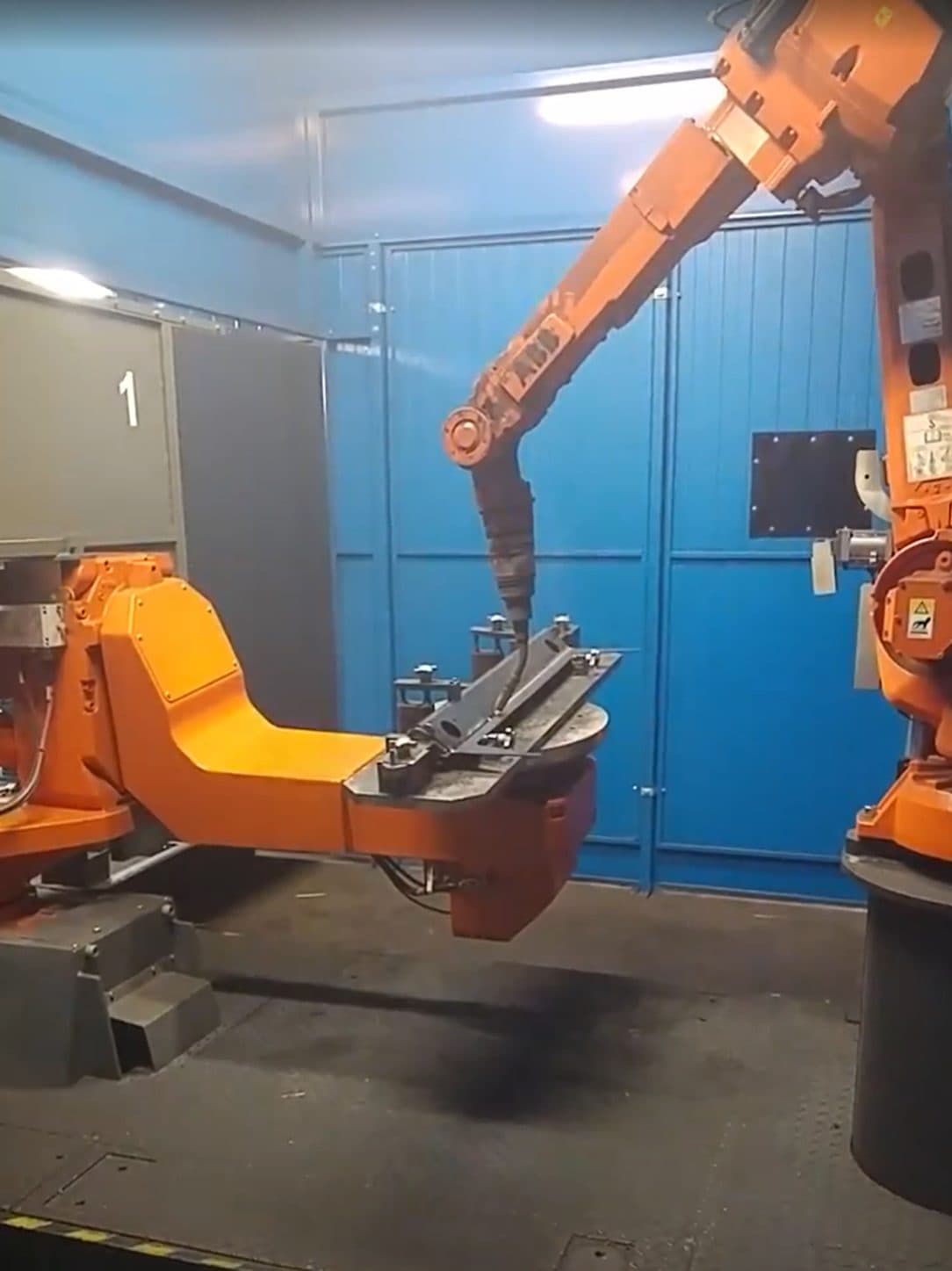
Where robots pay their way
- Machine tending: loading and unloading CNC machines, presses and moulding machines
- Welding: consistent, repeatable welds on batch and repeat work
- Handling: heavy, awkward or repetitive lifts that wear people out
- Collaborative applications, where a fully guarded cell will not fit
How a cell comes together
- 01Application reviewParts, cycle time, changeover, floor space and how the cell will be loaded.
- 02Concept and simulationLayout and robot simulation to prove reach and cycle time before anything is ordered.
- 03SafeguardingRisk assessment and guarding designed to EN ISO 10218 and EN ISO 13849.
- 04IntegrationRobot linked to the existing machine controls and safety system.
- 05CommissioningRobot and PLC programming, testing, and training for your operators.
From collaborative robots to heavy payloads
We work with ABB on industrial cells, including heavy-payload robots on track systems, and with Universal Robots where a collaborative robot suits the job better.
We also support existing cells. One ABB welding cell we look after uses RFID tags on its fixtures, so the robot recognises which fixture is loaded and runs the right program automatically, with no program selection by the operator.
Platforms
- ABB industrial robots
- Universal Robots
- Integration with Mitsubishi, Siemens and Allen Bradley PLCs
Common questions
Is our process suitable for a robot?
Good candidates are repetitive, consistent tasks: the same parts, presented the same way, many times a shift. Send us a video of the task and the part drawings and we will give you an honest view before any design work starts.
Can a robot work with our existing machine?
Usually, yes. Most CNC machines and presses can be interfaced for automatic doors, clamping and cycle start. We check the machine control and safety system first.
Do we need guarding?
Almost always for industrial robots. Collaborative robots can sometimes run with reduced guarding, but only where a risk assessment shows the whole task is safe. The tool and the part matter as much as the robot.
Who programs the robot after handover?
We train your team to run the cell, recover from faults and make simple changes, and we can support further changes as your products change.
Project enquiry
Got a machine that worries you?
A few details and a photo of the panel are enough to start. You will hear back directly from an engineer.